
Release date
Vegetation Survey and Active Layer Soil Sampling in Black Spruce Forests of Interior Alaska
Post Date:
Author: Ruixin Wang (Specially Appointed Assistant Professor, Niigata University)
As one of the dominant tree species in boreal permafrost ecosystems, black spruce (Picea mariana) is characterized by low nutrient requirements, a shallow and widespread root system, and slow growth. Consequently, the structure of black spruce forests plays an important role in shaping permafrost environments and active layer development. However, with ongoing global warming and Arctic amplification, rising temperatures have accelerated permafrost degradation, deepened the active layer, and increased wildfire frequency, thereby altering vegetation composition, forest structure, and the regeneration capacity of black spruce forests, with potential consequences for carbon cycling in permafrost ecosystems.
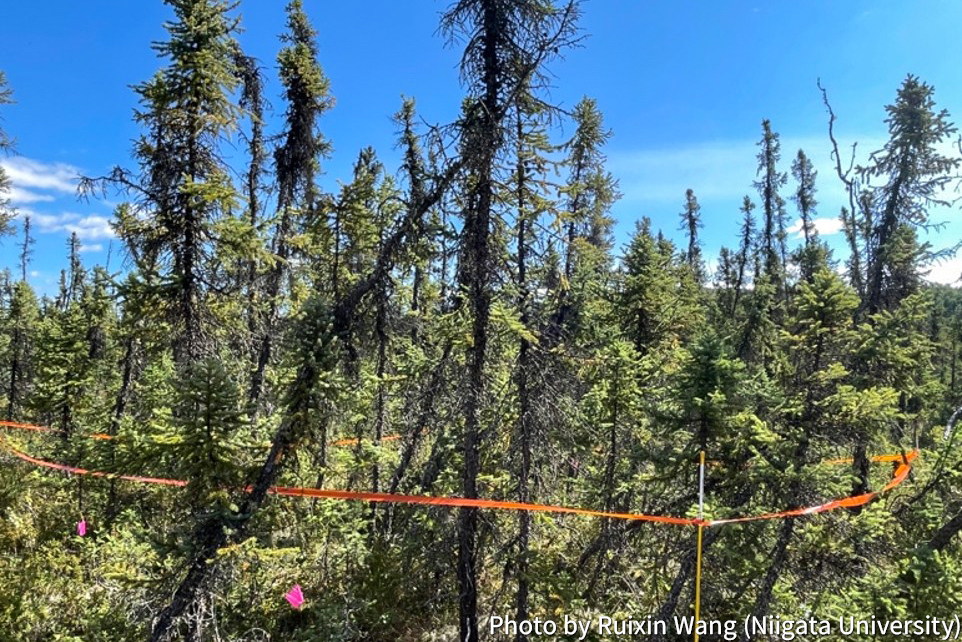
Supported by the ArCS III program, I conducted a one-month field investigation in Fairbanks, Alaska, from to . The primary objectives were to establish sampling plots with contrasting black spruce stand densities (high, medium, and low), investigate overstory and understory vegetation composition, and collect soil profile samples throughout the active layer. To minimize the influence of spatial heterogeneity, two representative study sites, the University of Alaska Fairbanks (UAF) and Poker Flat Research Range (PFRR), were selected after extensive discussions with researchers at the University of Alaska. Several soil sampling methods were evaluated, and manual cutting was ultimately adopted to collect intact active-layer soil profiles while minimizing soil compaction during sampling.
Field observations revealed clear differences in understory environments among stands with different tree densities. Low-density black spruce stands exhibited wetter soils and a higher coverage of Sphagnum spp., whereas high-density stands were relatively drier and supported a more diverse understory vegetation, including Red-stemmed feathermoss (Pleurozium schreberi), Stair-step moss (Hylocomium splendens), Labrador tea (Rhododendron groenlandicum), Yellow star moss (Campylium stellatum), Cloudberry (Rubus chamaemorus), and Grey reindeer lichen (Cladonia rangiferina). In total, eighteen active layer soil profiles were successfully collected.
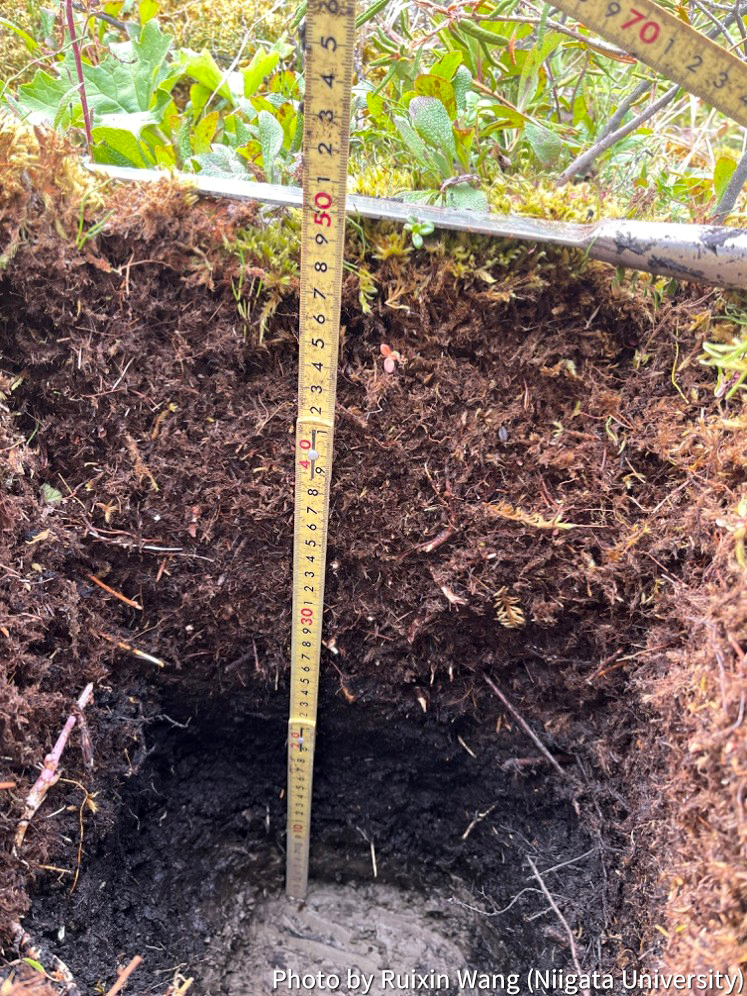
This overseas field investigation has greatly improved my understanding of vegetation distribution and forest structure in Arctic permafrost ecosystems and has established a solid foundation for my future research. Using the collected soil samples from different depths of the active layer, I will investigate the vertical distribution of carbon, nitrogen, and phosphorus in the soil and examine how nutrient dynamics within the active layer regulate microbial carbon mineralization. The outcomes of this study are expected to provide fundamental knowledge for predicting potential carbon release from Arctic permafrost ecosystems under a warming climate.