Release date
Sampling of Arctic char and monitoring of the gillnets
Post Date:
Author: Shoma Tsujimura (2nd-year Master’s Student, Graduate School of Fisheries Sciences, Hokkaido Univ.)
Just like last year, we came to Qaanaaq again this summer to sample Arctic char! (Photo 1)
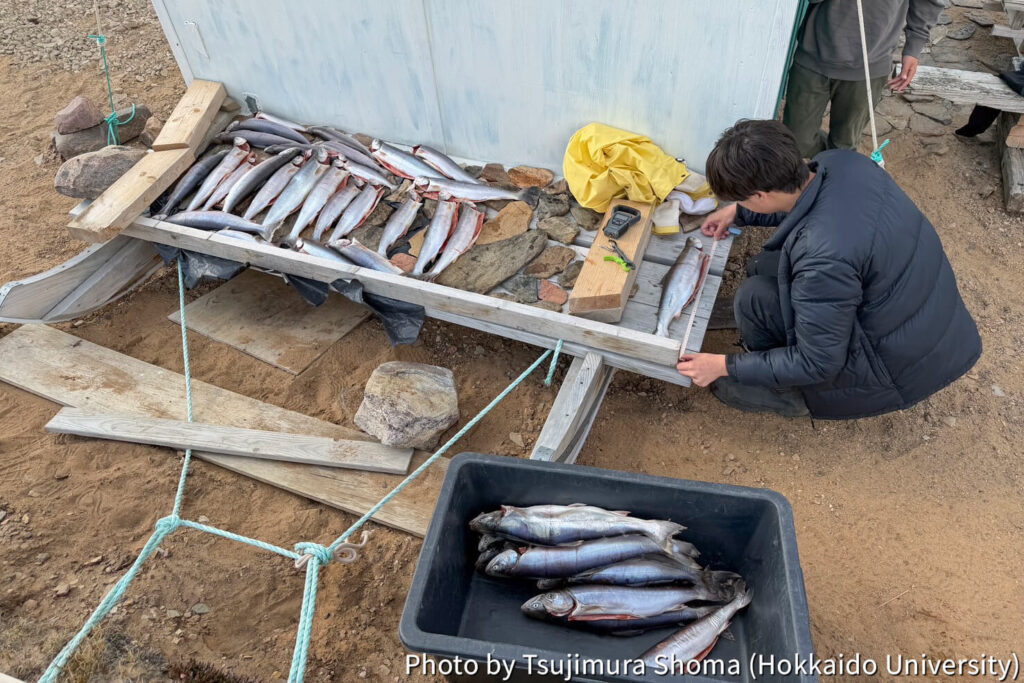
Photo 1: Sampling of arctic char
This fish is a type of salmon that lives in the Arctic region. They descend from inland freshwater to the sea in summer and migrate along the coast to feed. The residents of Qaanaaq catch them by gillnets and use them as an important food source in summer. This time, we used gillnets to catch Arctic char in their fishing grounds, recorded biological information such as body length and girth, sampled stomach contents, and collected information on fishing methods. There are many unknown aspects of the ecology of Arctic char in the northwestern part of Greenland, including their relationship with the local community, making this a very interesting topic. Going forward, we plan to analyze the data collected this time to clarify the characteristics of individuals and their feeding ecology.
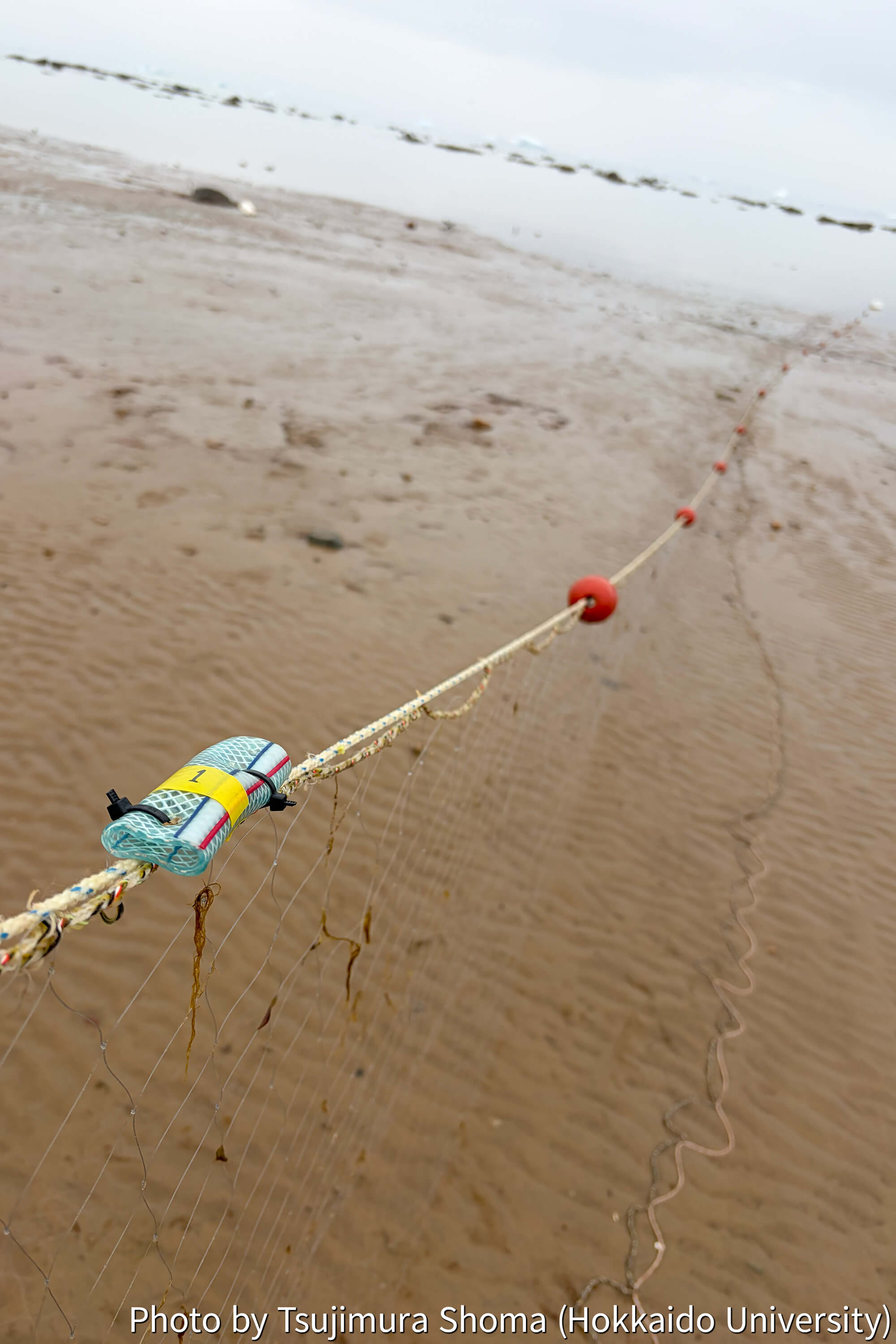
Arctic char fishing in Qaanaaq is unique, with fishing taking place in shallow waters only 20 to 30 meters from the shore, and a system established where one person operates a gillnet. In this fishing area with a large tidal range—where the seabed is exposed at low tide and reaches a depth of 1.5–2.0 meters at high tide—Arctic char are caught using nets that are stretched out as the tide rises. (Figure 1,Photo 2,Photo 3)
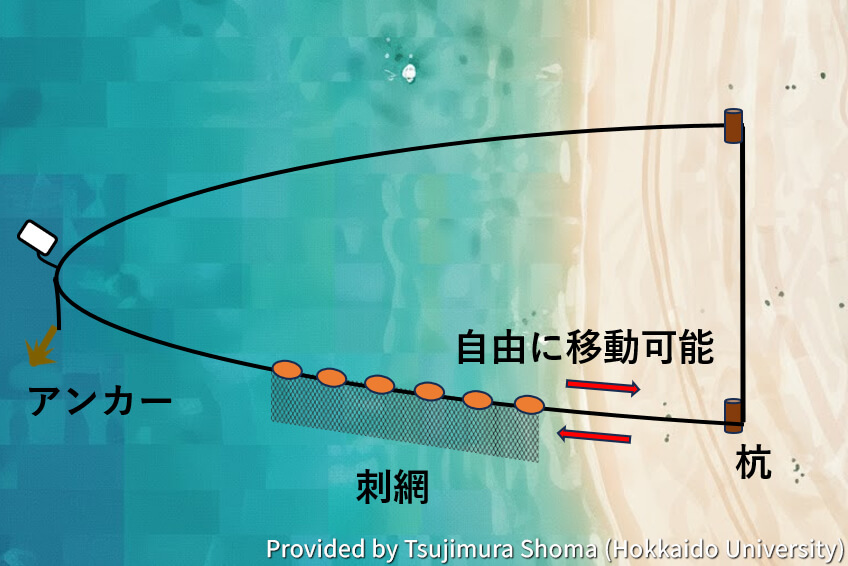
Figure 1: Illustration of gillnet fishing in Qaanaaq. As shown in this illustration, the system is designed to allow the gillnet to move freely.
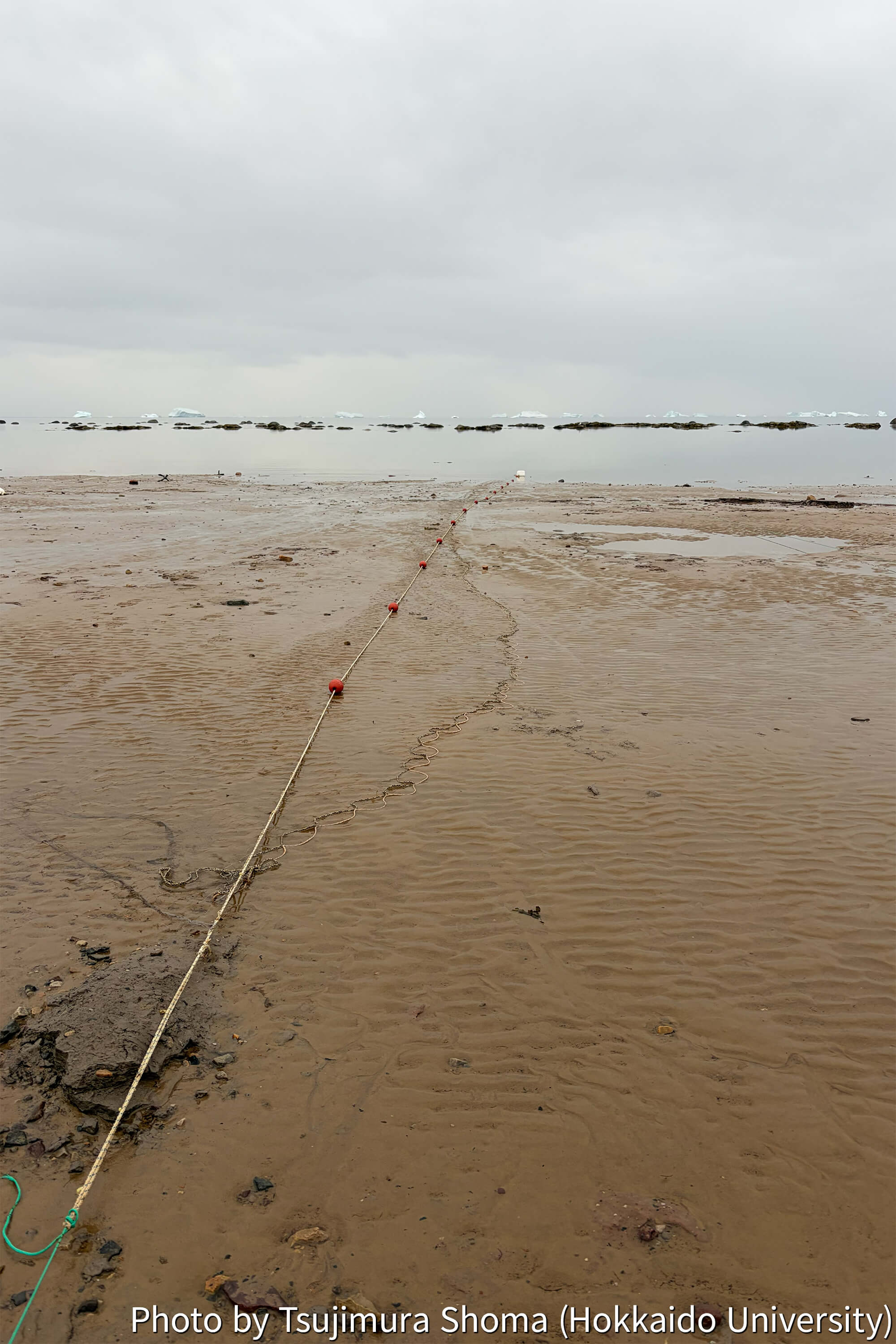
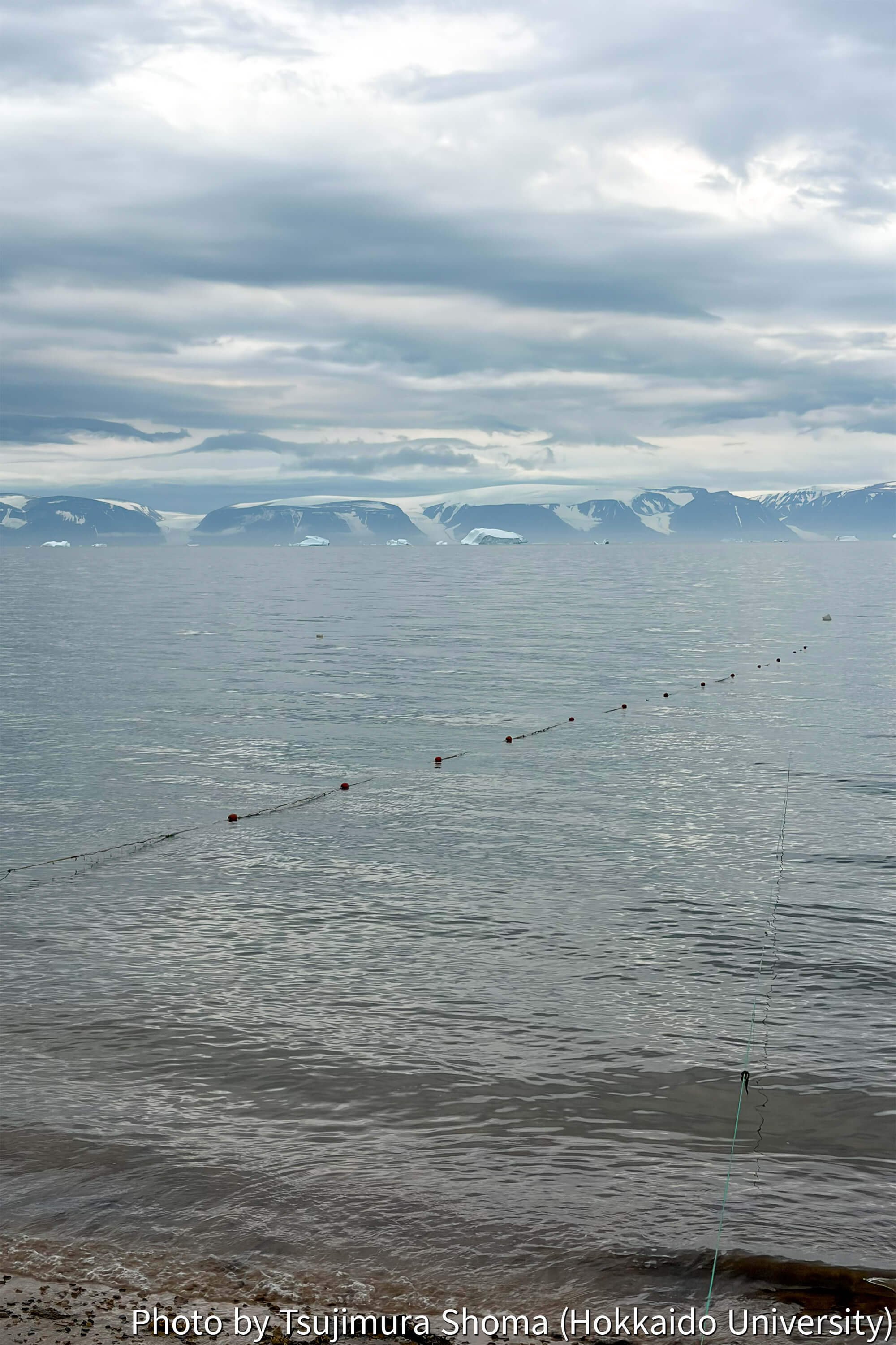
This fishing method makes use of local knowledge and takes advantage of the ecology of Arctic char and the characteristics of the location. This study isn’t just about gathering biological data—we’re also exploring what makes fishing more efficient, such as how the nets spread and the timing of the catch. By attaching small sensors called ‘loggers’ to the gillnets to measure water depth and acceleration, we hope to visualize how the nets open and how the fish are caught. We’re really looking forward to analyzing the data! (Photo 4)