

Release date
Bowhead whale survey in Disko island (Qeqertarsuaq)
Post Date:
Author: Monica Ogawa (NIPR)
The bowhead whale, one of the few whale species that inhabits the Arctic year-round, was the target species of a bio-logging study conducted by a research team from Japan, Denmark, and Canada to investigate their underwater behavior (Photo 1).
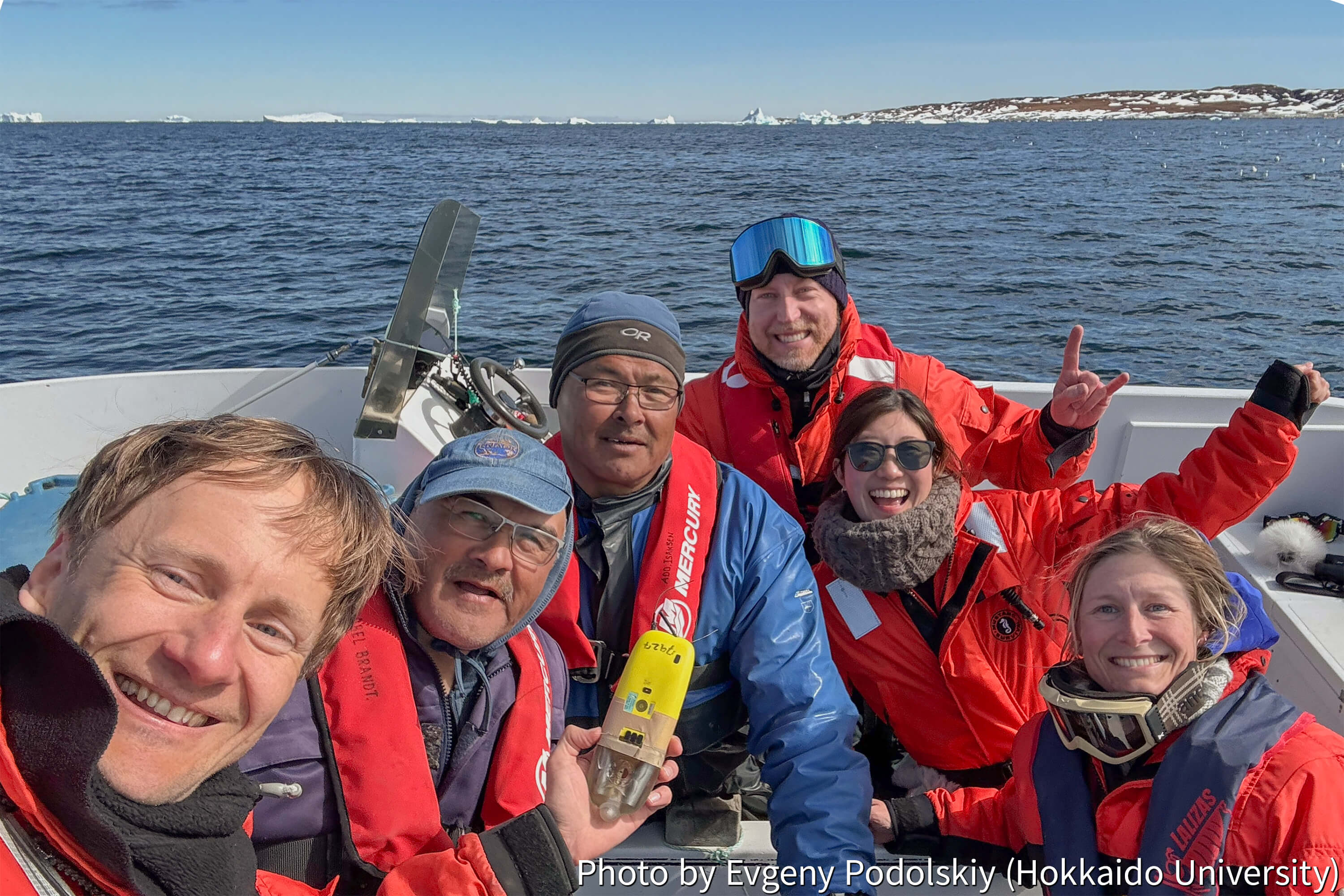
Photo 1: Research team with successfully retrieved tag
Our study was conducted on Disko island (Qeqertarsuaq), the largest island off the west coast of Greenland. The bowhead whale migrates to these waters to feed during spring, and stay until around the end of May. The bowhead whale is a symbol of Qeqertarsuaq and is even featured on the town’s flag.
In this study, we attempted to attach data loggers to bowhead whales using drones. The loggers record high-resolution data on underwater sounds, water temperature, diving depth, and swimming speed, allowing detailed analysis of their behavior.
Compared to my previous experience working on narwhals, I was struck by the abundance of bowhead whales in this area. They could be seen immediately after leaving the harbor (Photo 2), and sometimes even from the hotel we were staying!
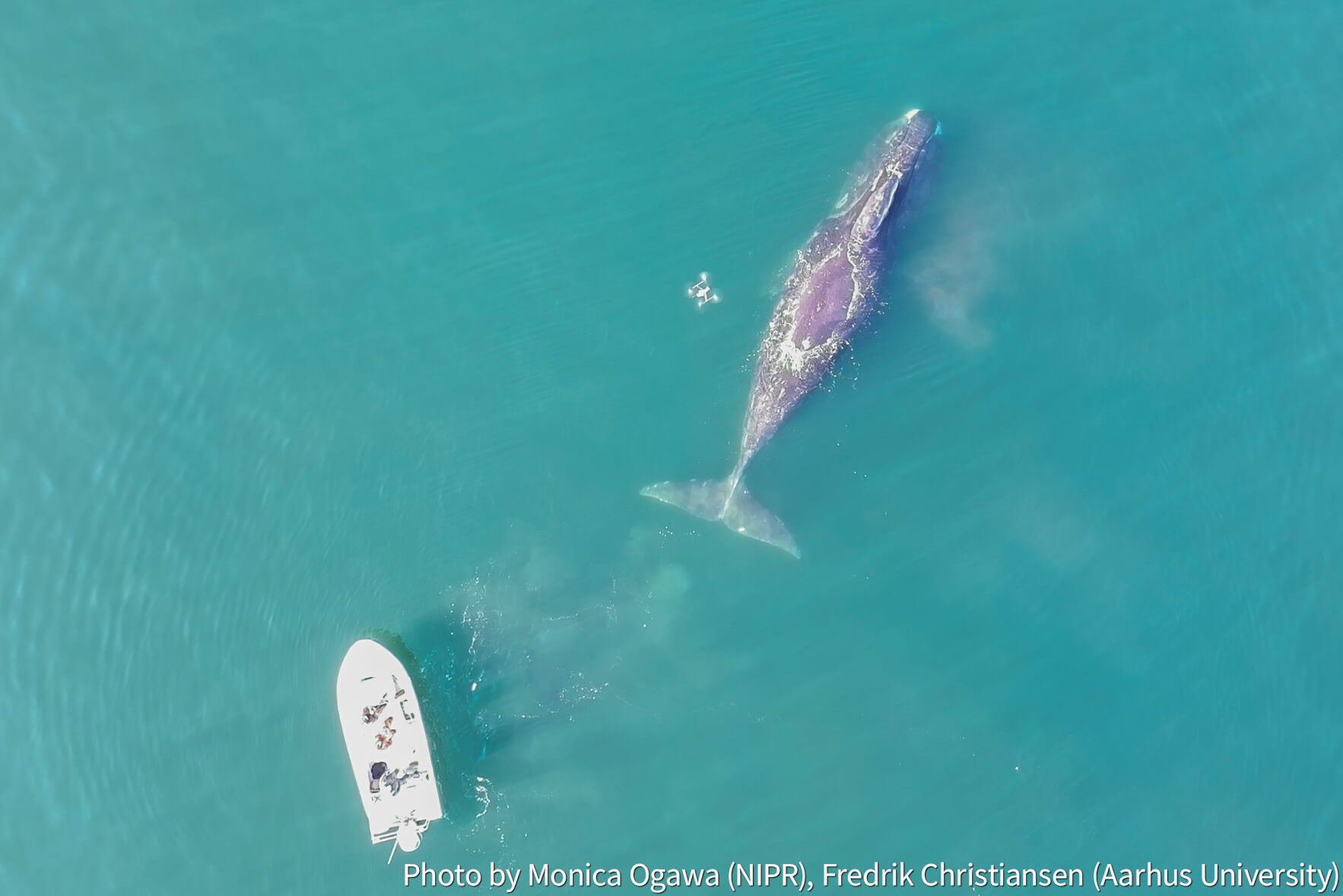
Photo: Ship, whale and drone
Bowhead whales typically dive for around 20 minutes to forage, then surface for a few minutes to breathe. We used these surfacing periods as opportunities to attach tags from drone. Traditionally, tags have been deployed from boats using long poles, but drone-based tagging is now becoming increasingly common. This method allows for a more efficient and less invasive approach to tagging whales.
During this study, we successfully tagged approximately 30 individuals in 10 days, collecting around 400 hours of data, with a tagging success rate was almost 100% (Photo 3).
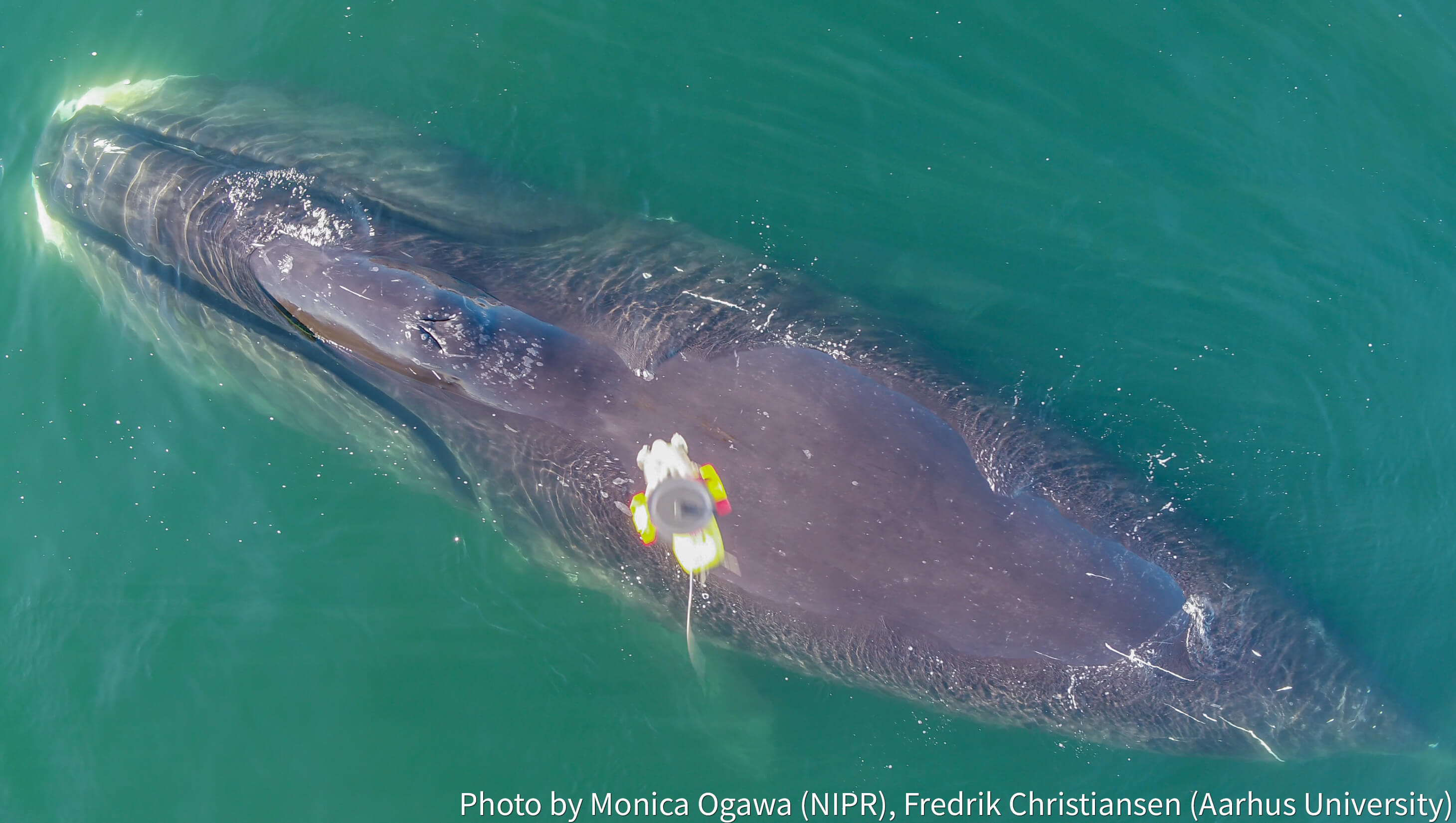
Photo 3: Tag deployment by dropping a tag from a drone
Bowhead whales are believed to live for around 200 years. Watching these enormous whales and hearing their powerful breaths made me wonder what changes they had witnessed over the centuries and what experiences they had lived through. At the same time, it made me hope that the Arctic Ocean will continue to provide a rich and thriving home for them long into the future.
Due to intensive whaling, bowhead whales experienced a severe population decline and were nearly extirpated from Greenland. In the 1980s, their density was estimated to be as low as 0.0013 individuals per km2 (Reeves and Heide-Jørgensen 1996). Today, hunting is strictly regulated, with only a few individuals harvested annually, only by Inuit hunters, and the population has shown substantial recovery. During our survey, we observed dozens of bowhead whales in a single day, indicating a marked increase in local population.
Witnessing this, I felt a strong sense of respect for nature’s resilience.
Reference
Reeves, R. R., & Heide-Jørgensen, M. P. (1996). Recent status of bowhead whales, Balaena mysticetus, in the wintering grounds off West Greenland. Polar Research, 15(2), 115–125.