Release date
Ground ice-related landforms (pingo, thermokarst) and spring states, and cold storages in Mongolia
Post Date:
Author: Mamoru Ishikawa (Hokkaido University), Kazuyuki Saito (JAMSTEC)
Landscape of Mongolia, southernmost of Eurasian permafrost, is highly complex, reflecting the presence or absence of permafrost. In addition, the livelihoods of nomadic people living in this country have been dependent indispensably on the ecosystem services provided by permafrost underlying ground surface. Climate change and the subsequential changes in ground thermal and hydrological regime are also relevant to the settled communities in the northern regions. The research targets of this sub-theme (Land Life Environment) include understanding of the dynamics of ground ice in permafrost, changes in the subsurface thermal regime, and their impacts on people’s lives.
This year, we conducted a series of field surveys in the permafrost regions of northern to central Mongolia, to study the unique landforms that reflect the aggregation and degradation of ground ice, such as pingos, thermokarst, and patterned ground. We also surveyed present states of natural springs. The field campaign was greatly supported by the Institute of Geography and Geoecology, Mongolian Academy of Sciences.
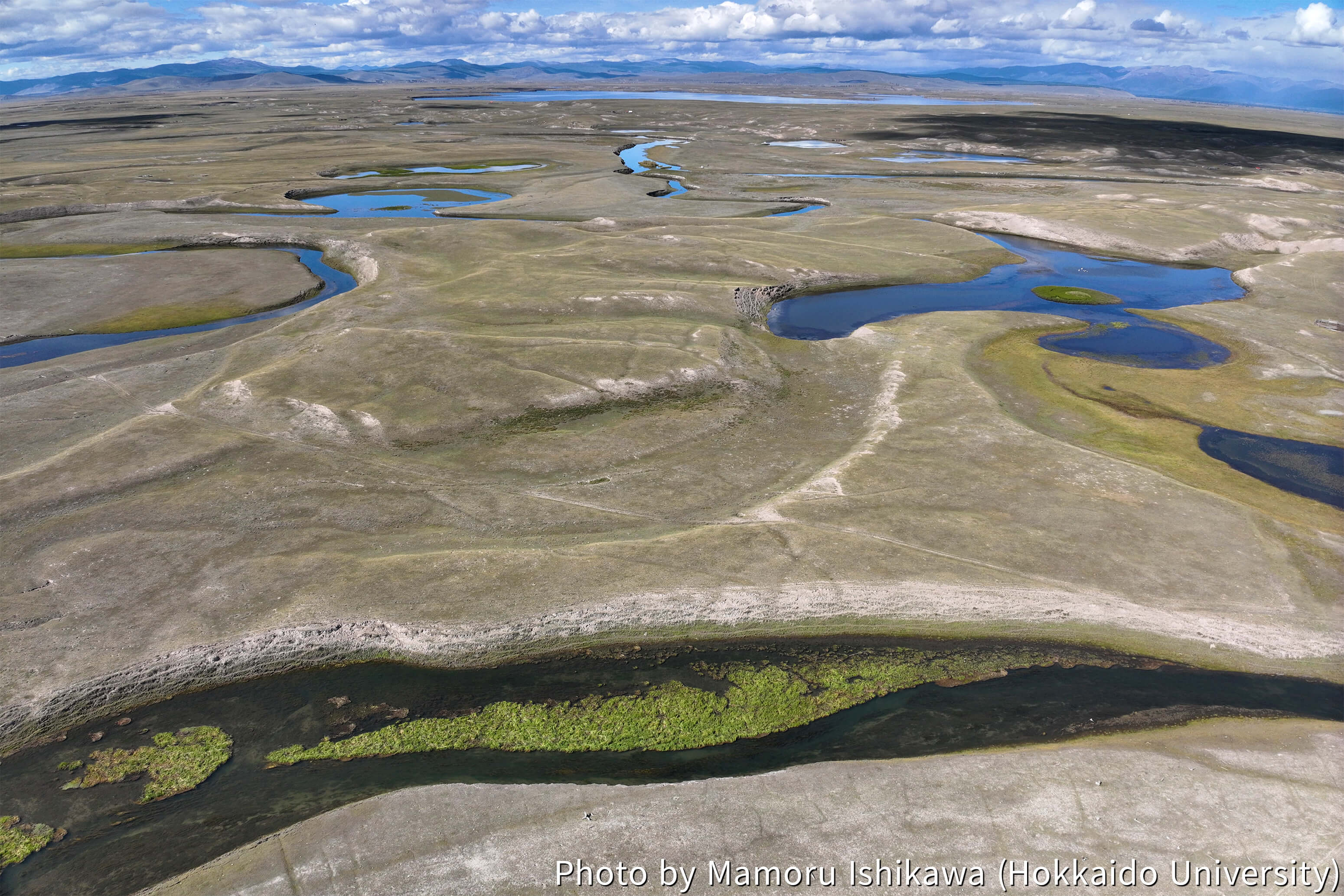
Topographic surveys used state-of-the-art UAV (Unmanned Aerial Vehicle) system and were conducted totally at several dozen sites in the Darhad Basin and the Hangai Mountains (Photo 1). The images obtained are under processing to construct high-definition 3-D topographic models. Based on these models, we will elucidate topographic characteristics of pingos and thermokarst in response to the permafrost environment between continuous, discontinuous and sporadic zones.
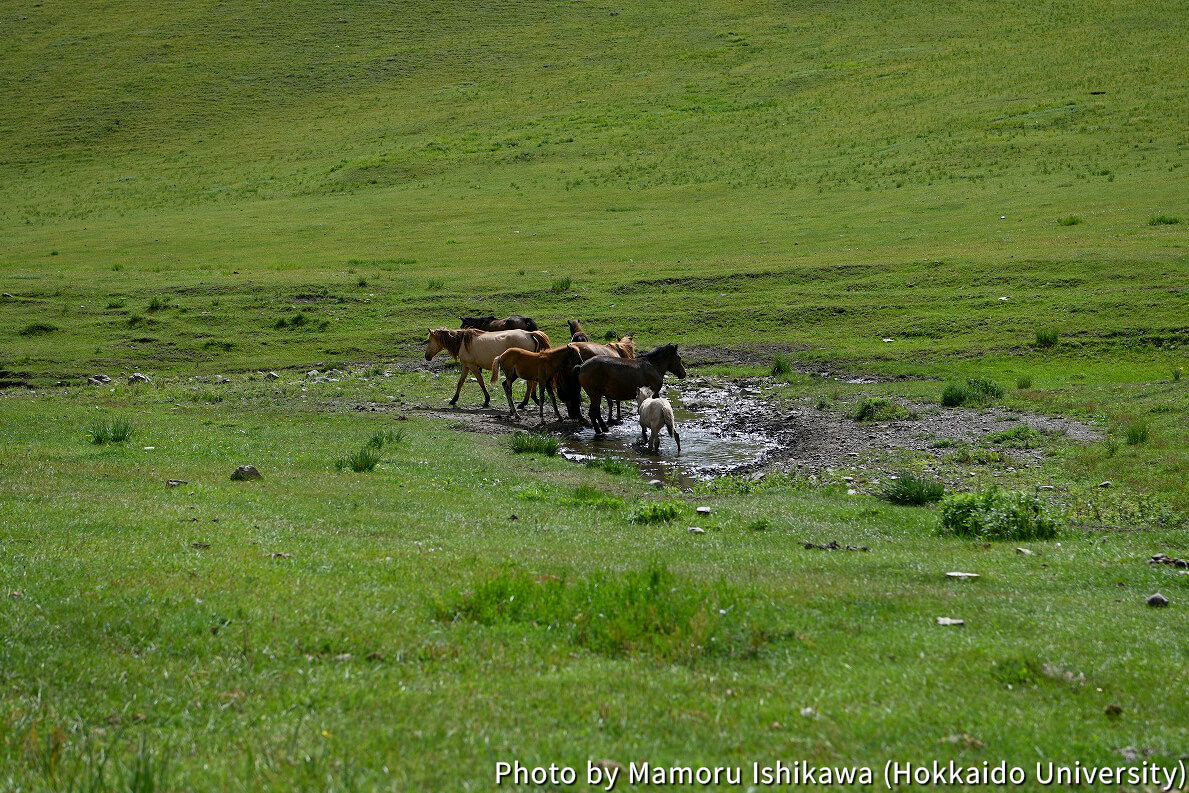
The spring survey was conducted in the suburbs of Ulaanbaatar and in the Hentii region to the east. We confirmed spring state on site by ourselves (Photo 2). We also collected information in terms of the historical changes and usage of spring with the interview with local nomads, whose livelihoods are highly dependent on spring water. These data will be the parts of training and validation datasets for forthcoming machine learning analysis, which is to create a more extensive and comprehensive map showing spring changes in decades, and to understand environmental factors that contribute to the depletion and remining of spring.
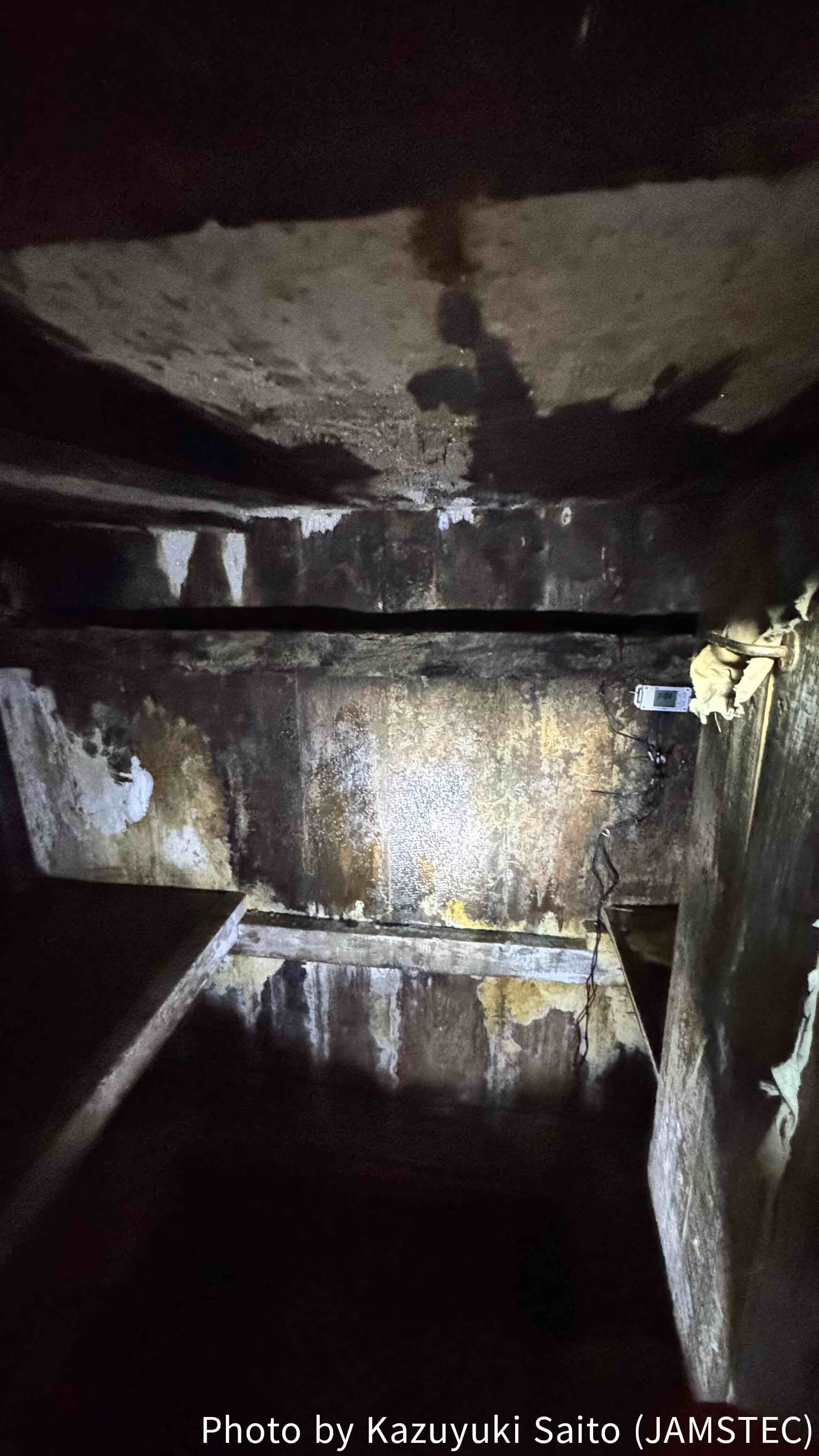
We also investigated the underground cold storage practices in the northern areas including the Darhad Basin and the northern side of the Hangai Mountains (Photo 3). We found out that the family-based cold storages, partially replaced the large-scale communal facilities build and operated under the Soviet regime, are still actively used in the area as a household infrastructure, but challenged by recent natural and social development, such as unstable power supply and warming/wetting grounds.