
Release date
Summer School 2025 in Tromsø, Norway
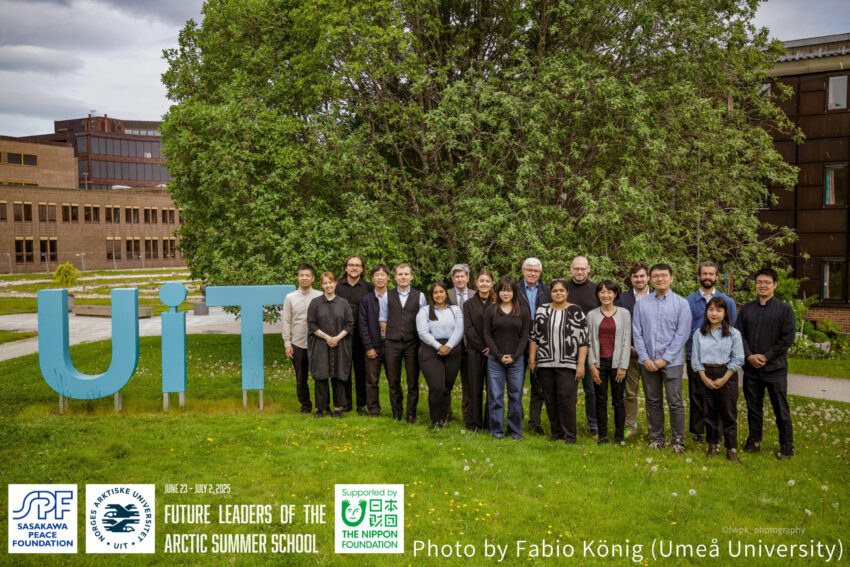
In June 2025, the Arctic University of Norway held a summer school aimed at developing Arctic-related human resources for students and young researchers from Europe, America, and Japan. The program included lectures, discussions, and presentations across three fields — governance, security, and the climate and environment — to promote multidisciplinary learning and international exchange about the Arctic region. Two ArCS III Project Assistant Professors participated in the program; here, we report on their experience.
Table of contents
Toward an Integrated Understanding of the Arctic across Natural, Human, and Social Sciences
Post Date:
Author: Atsushi Yoshida (NIPR)
From to , I participated in the Future Leaders of the Arctic Summer School, co-hosted by the Sasakawa Peace Foundation and The Arctic University of Norway (UiT). While the program included some natural science topics, the main focus was governance and security. As an atmospheric scientist, most of these topics were completely new to me. Since I began studying on the Arctic environment, I have sensed that international dynamics and social science perspectives might be affecting my work, but I had never clearly grasped them. This summer school was my opportunity to explore that vague but persistent feeling.
Diplomacy, security issues, and history were like a different world to me. However, thanks to the remarkably comprehensive pre-reading materials (which were the hardest part of the entire program), I managed to follow most of the lectures without being left behind. The teachers’ clear explanations, lively discussions among participants, and the many informal conversations outside the classroom, gradually helped me understand the contents.
One thing that struck me through whole lecture was that the Arctic is no longer separate from global geopolitical tensions. The long-held idea of “Arctic exceptionalism” has already faded. Like the melting sea ice, this shift feels irreversible. I was also particularly interested in the governance and historical context of Svalbard (Norway), as well as Norway’s careful political approach in the region. I once visited Ny-Ålesund in Svalbard to conduct atmospheric observations, and it was interesting to learn how complex international politics are deeply connected to a place I had known only as a scientific field site.
Although the program’s lectures were divided into three main categories—governance, security, and natural science, many lectures combined these topics, showing how closely they relate to one another. Through this, I realized how climate change can reshape geopolitics and how geopolitics, in turn, can influence the direction of scientific research.
In the second half of the program, we worked in groups to produce a policy paper. My team chose the topic of “Protecting Submarine Cables in the Arctic.” We examined cases of cable damage and sabotage, the limitations of international law, geopolitical risks, and environmental impacts, and drafted a set of policy recommendations aimed at NATO member states.
As the only natural scientist in the group, I was responsible for summarizing scientific knowledge related to the environmental impacts of submarine cables. Although this topic was outside my expertise, I was grateful that my teammates trusted me as the only member with a PhD in the natural sciences, and I felt a strong sense of responsibility. In my everyday research, I focus on understanding nature, but this was a rare chance to go one step further and experience how scientific findings can be translated into policy. It reminded me how important and heavy it can feel to share scientific knowledge in a political setting.
As a side note, during the open house event of the National Institute of Polar Research in 2025, I had many opportunities to speak with visitors at the Arctic booth. Some visitors asked about international affairs, and the knowledge I gained from this summer school, such as the geopolitical situation surrounding resource development in Greenland, was extremely useful. It allowed me to explain not only natural science but also the social and political context, and I could clearly feel the value of what I had learned.
Neither natural science nor social science alone is enough to understand Arctic issues. In a region where science and policy strongly influence each other, this summer school became an excellent starting point for thinking about how I, as a natural scientist, should engage with the Arctic.
-
 Final presentation of the group work
 -
 Certificate of Completion of the Arctic Summer School
Think of the Arctic in the Arctic
Post Date:
Author: Tomoko Tanabe(NIPR)
I spent a valuable week to learn a lot about the Arctic challenges and the importance of the dialogue through the Arctic Summer School at 69°N latitude, Tromsø, Norway, organized by UiT the Arctic University of Norway and the Sasakawa Peace Foundation. It consisted of three modules―Governance, Security, and Environment. Participants selected an Arctic issue based on the lectures, then wrote up a policy proposal as a result of group discussions.
Hearing about ongoing issues from experts directly made each topic feel much more real than just reading or watching the news online. I learned that a given event can be seen differently depending on the cultural or historical background of each individual. I came to realize that there is no single correct answer that everyone can agree on, therefore, it is essential to continue dialogue on each Arctic issue. The experience of creating policy proposals was valuable in understanding that the realistic and effective proposals require diverse perspectives from various fields. I also learned from the attitude of other participants who maintained interest and asked questions, then sought a compromise point even when encountering differing opinions.
The hike during the excursion was a precious opportunity as well to sense the importance of maintaining the low tensions in the Arctic. I felt strange while seeing the peaceful sea from the top of the mountain in Sommarøy because it was just after learning the complex Arctic issues of security and mining, and the history regarding war. Overall, these experiences have encouraged me to think more deeply about how to contribute through my field of expertise to protecting the rights of indigenous communities and the sustainability of the Arctic and building a world with no war.
-
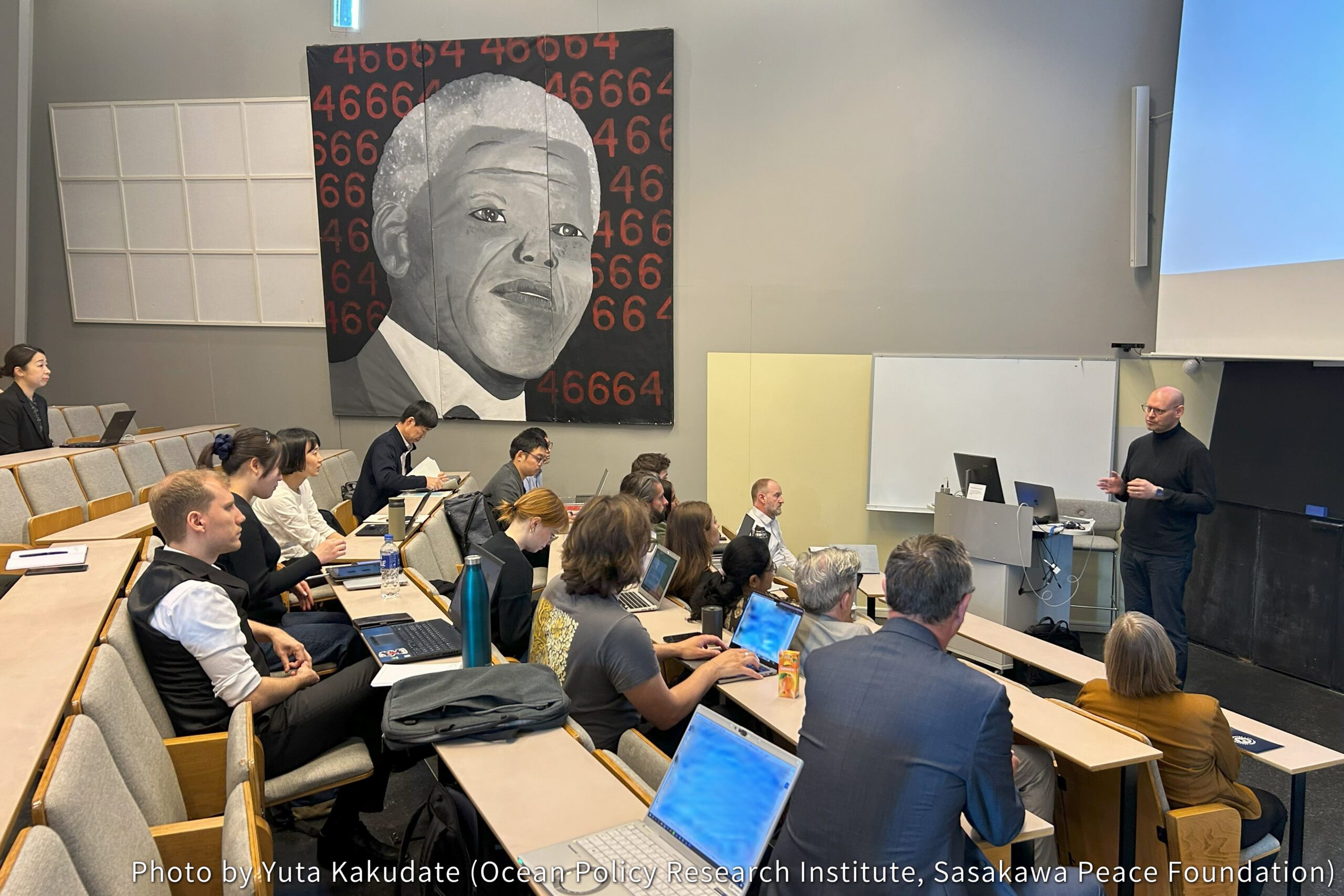 Day1, the beginning of the lecture
 -
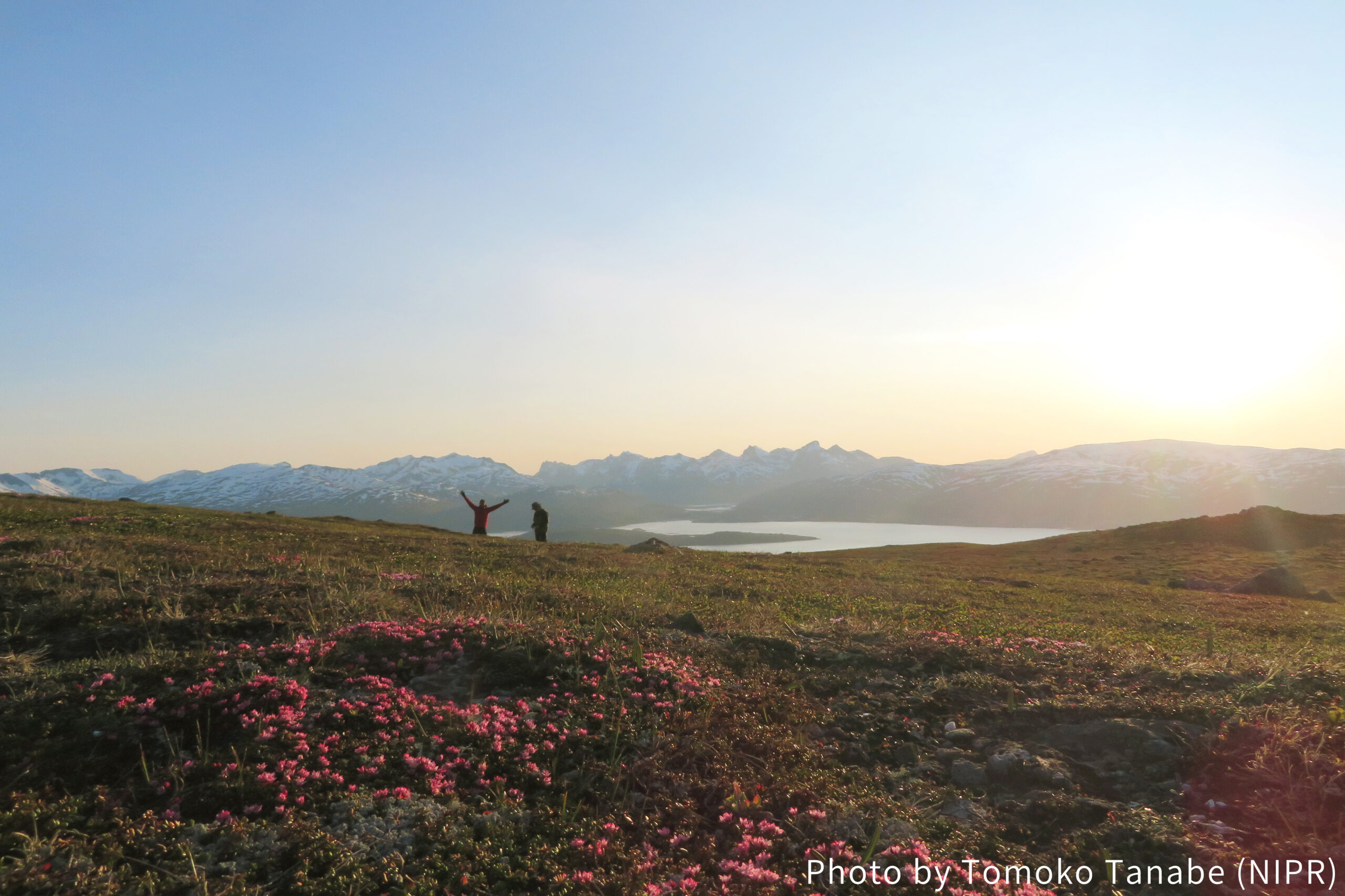 Feeling the beautiful Arctic nature on a Fløya hike in Tromsø