
Release date
Research report on Resilience in Arctic Fisheries to Climate Change
Post Date:
Author: Kaito Kanazawa
(First-year PhD student, United Graduate School of Agricultural Sciences, Iwate University)
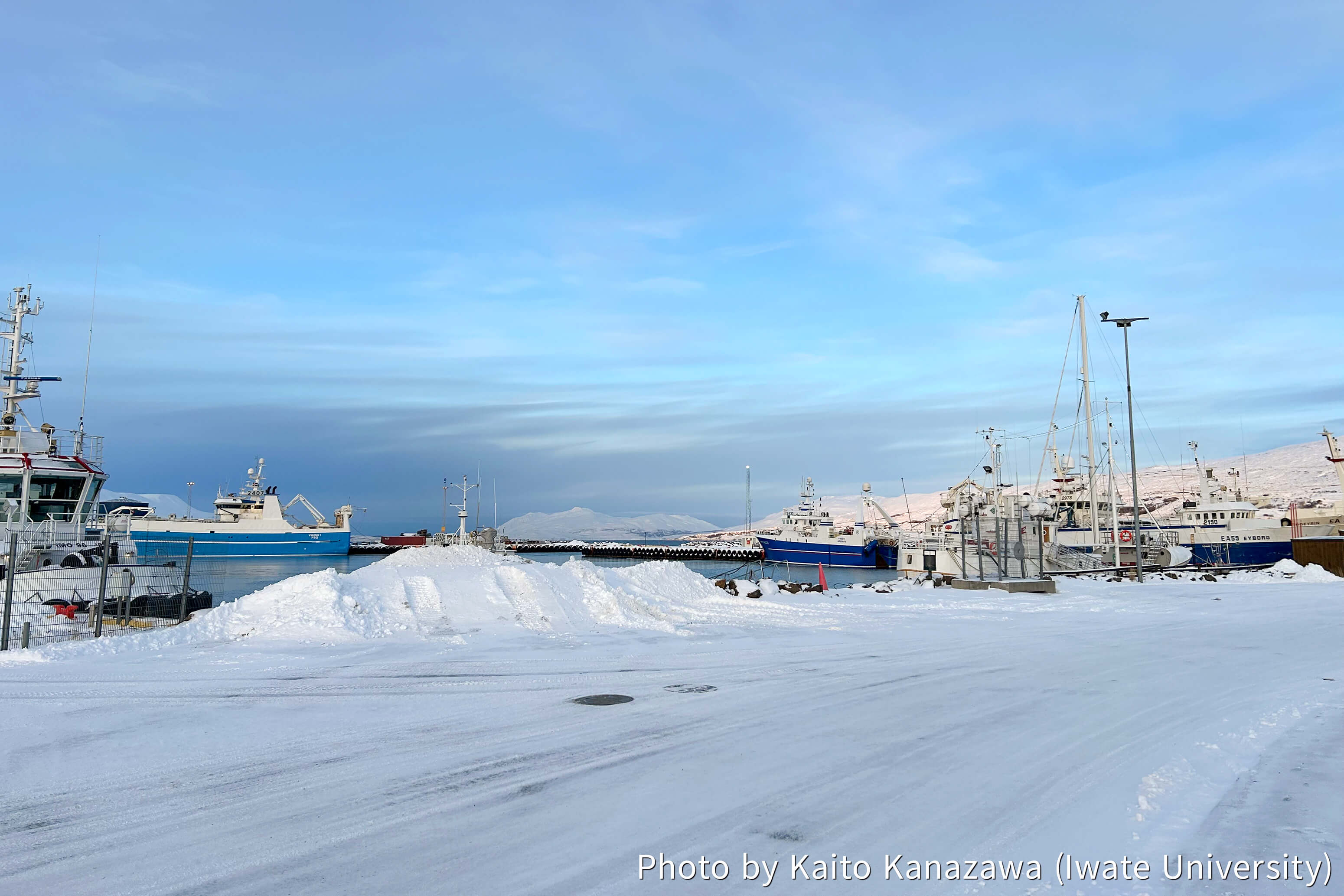
I conducted field research in Tromsø, Norway, and Akureyri, Iceland, from November 11 to December 5, 2025, to investigate and discuss the resilience of Arctic fisheries to climate change impacts.
In recent years, climate change and associated large-scale natural disasters have severely impacted fisheries worldwide. The Arctic region, in particular, is experiencing more rapid and extreme environmental changes due to climate change than other regions, raising serious concerns about the impacts on Arctic Ocean fisheries. In Norway and Iceland, the destinations of this research visit, fisheries constitute a major industry, and building resilience to climate change has become an urgent challenge for supporting coastal socio-economic systems.
I conducted data analyses on fisheries and held seminars with local researchers and students based at UiT The Arctic University of Norway in Tromsø and the University of Akureyri, Iceland. This research involved analyzing long-term changes in stock abundance, landing volume, and value of major species based on data, and examining the factors behind these changes through a literature review and discussions with local researchers.
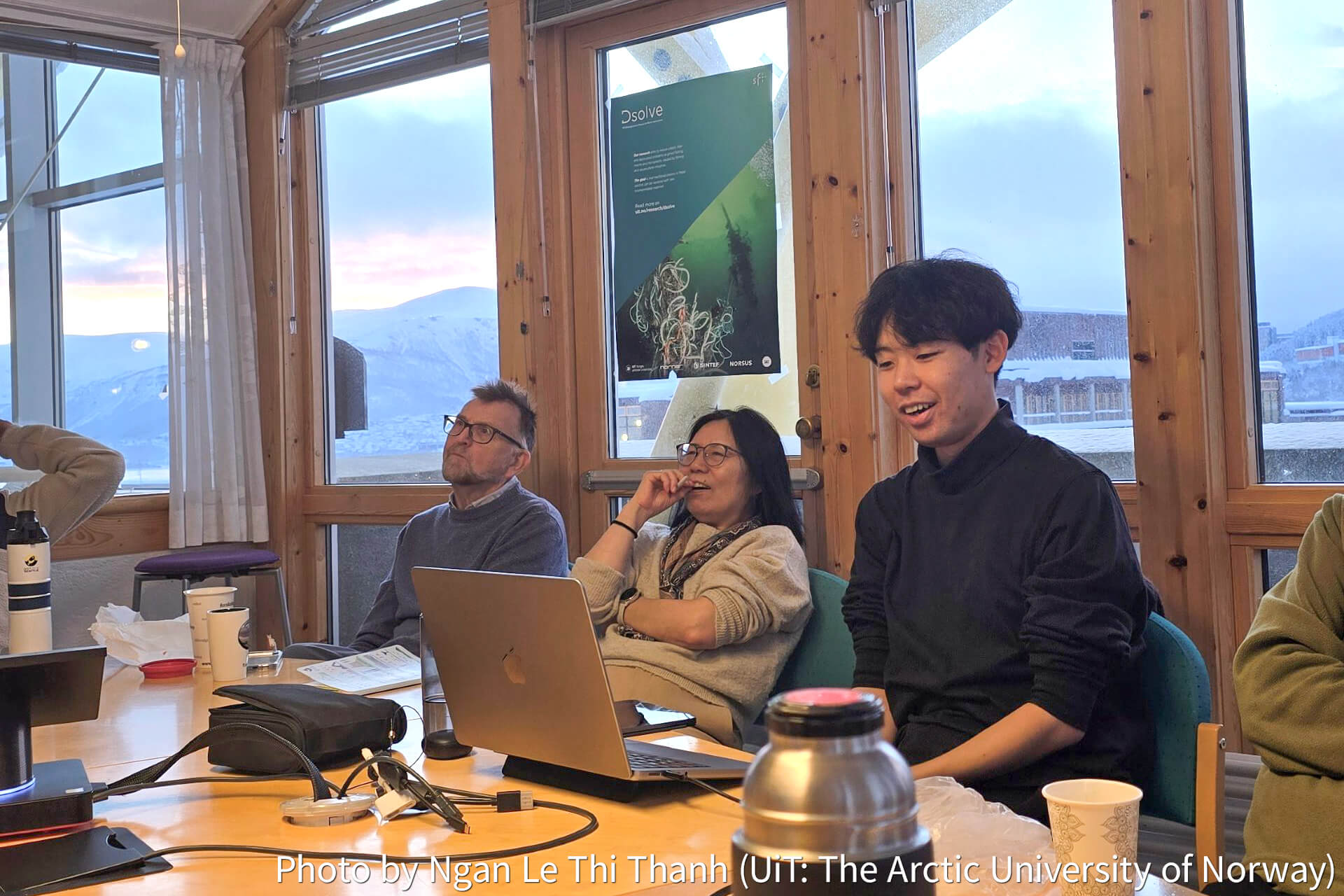
The analysis revealed that Arctic fisheries have historically experienced significant fluctuations in the composition of major fish species and continue to undergo such changes. Notably, fisheries have persisted and developed despite these fluctuations. The development of fisheries management systems, which differ substantially from those in Japan, appears to have played a crucial role in fishery resilience. During the seminars, I shared my research on Japanese fisheries as a case study and engaged in discussions focusing on the mechanisms of fishery resilience and the differences in fisheries management between the Arctic region and Japan. Through these discussions with local researchers, I gained valuable insights into analytical perspectives and research methodologies that were previously unfamiliar to me, making this a meaningful opportunity that will contribute to deepening my research.
Moving forward, I will conduct a more detailed analysis of the data collected during this visit, aiming to elucidate the mechanisms of fishery resilience. In particular, through a comparative analysis with Japanese fisheries, I intend to identify both universal and region-specific factors contributing to resilience, thereby developing theoretical frameworks that can contribute to strengthening resilience in Arctic fisheries and fisheries worldwide. Additionally, by leveraging the professional networks established with local researchers during this visit and maintaining continuous research exchanges, I aim to contribute to the advancement of Arctic fisheries research and sustainable fisheries development.