Release date
Report for participating in the 3rd Asian Conference on Permafrost (ACOP2026)
Post Date:
Author: Takahiro Abe (Nagoya University), Kazuyuki Saito (JAMSTEC),
Mamoru Ishikawa (Hokkaido University), Yoshihiro Iijima (Tokyo Metropolitan University)
As a regional conference of the International Permafrost Association (IPA), the 3rd Asian Conference on Permafrost (ACOP2026) was held at the Galleria Ulaanbaatar in Ulaanbaatar, Mongolia, next to the Sukhbaatar Square in central Ulaanbaatar (Photo 1).
Approximately 350 researchers from 24 different countries participated, including more than 10 researchers from Japan, mainly from the Land and Life Environment theme in ArCS III. The conference began with the greeting from the conference chair, Dr. Dashtseren Avirmed, director of the Institute of Geography and Geoecology, MAS, and Prof. Isabelle Gärtner-Roer, IPA representative. There were seven keynote lectures over the three days, one of which was delivered by Mamoru Ishikawa (Hokkaido University) about international research collaboration between Japan and Mongolia over the past 25 years (Photo 2).
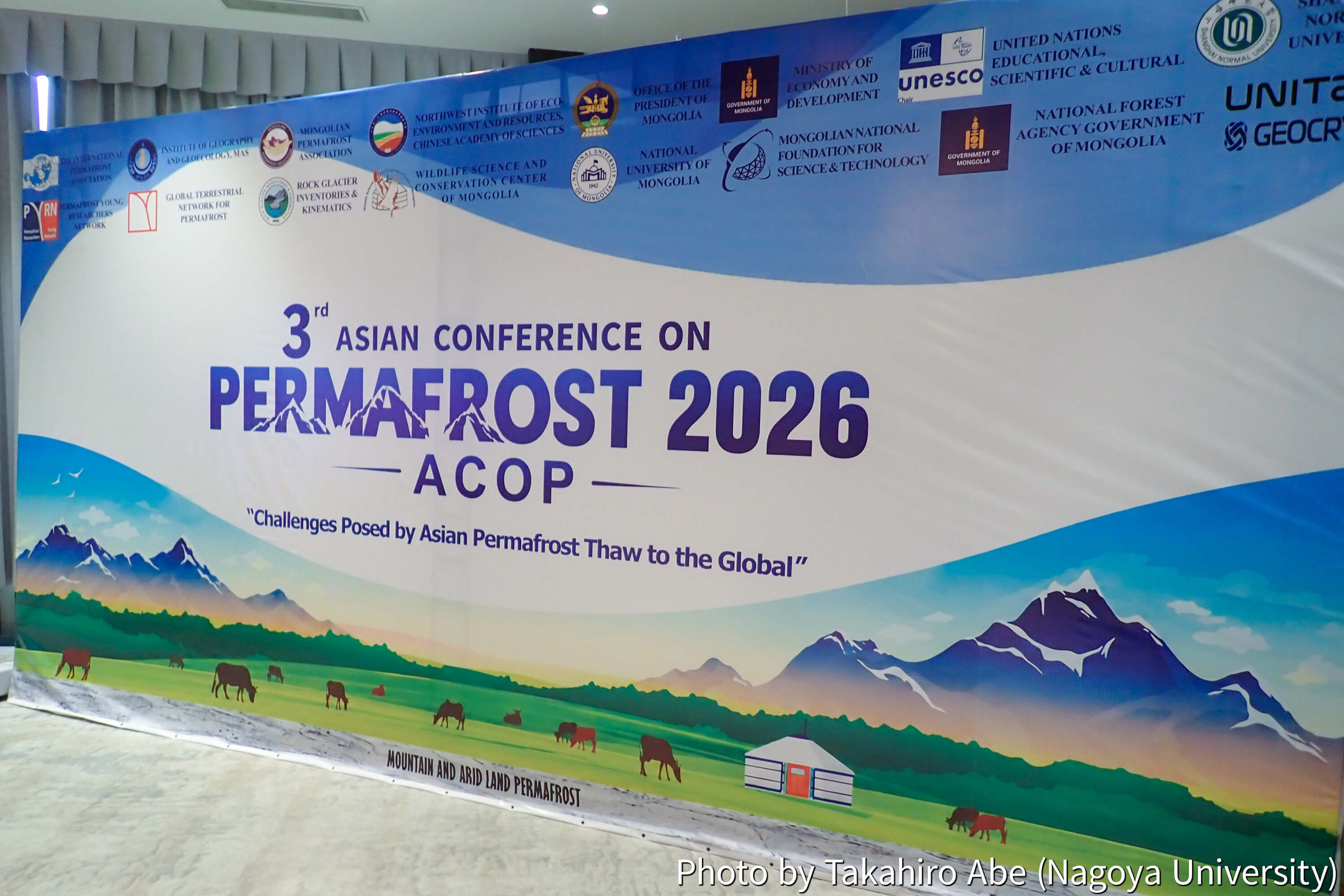
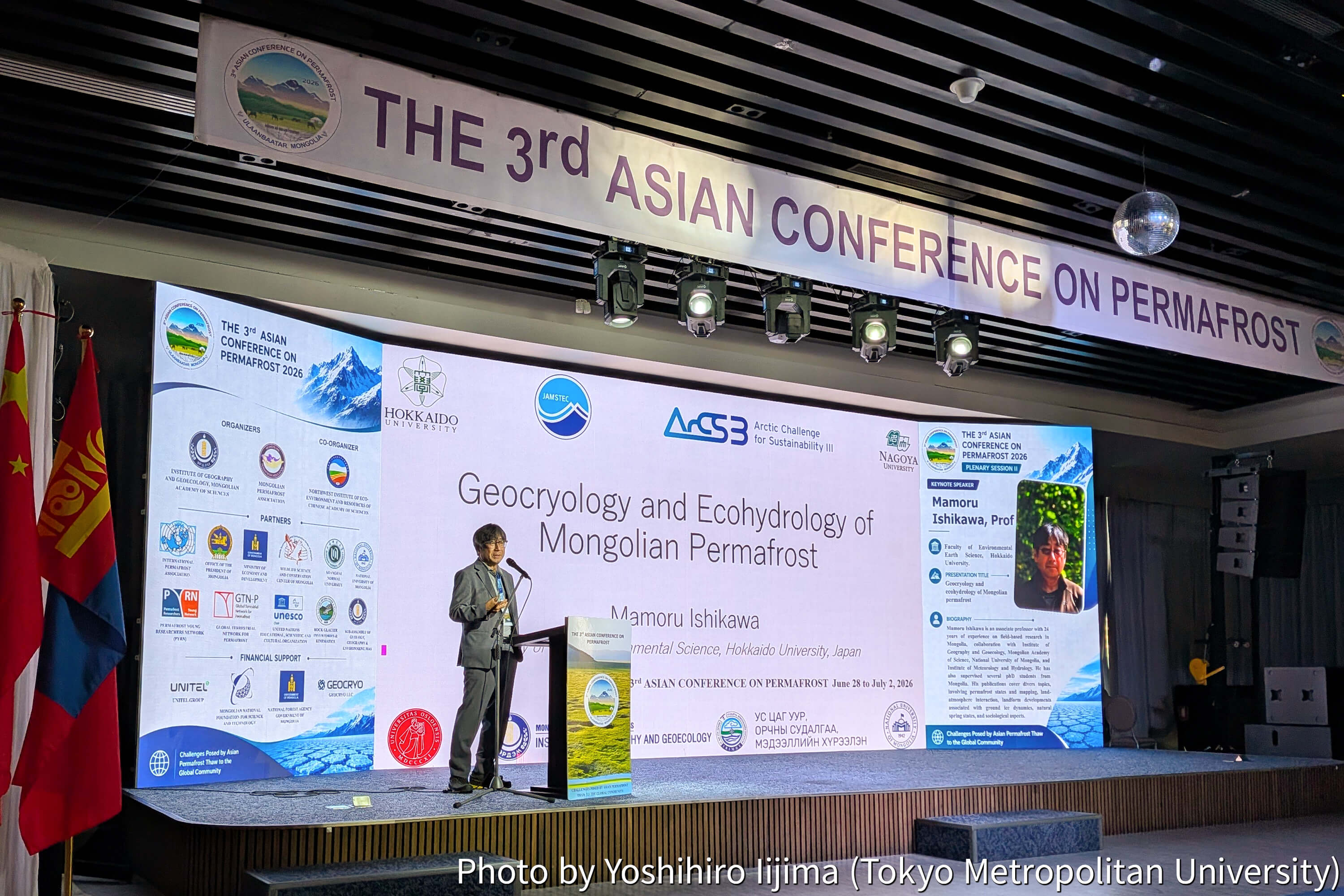
A total of approximately 240 oral and poster presentations were given between 29 June and 1 July. The program included a session, “Long-term Cold-Environment Permafrost Changes” proposed and chaired by the ArCS III members.
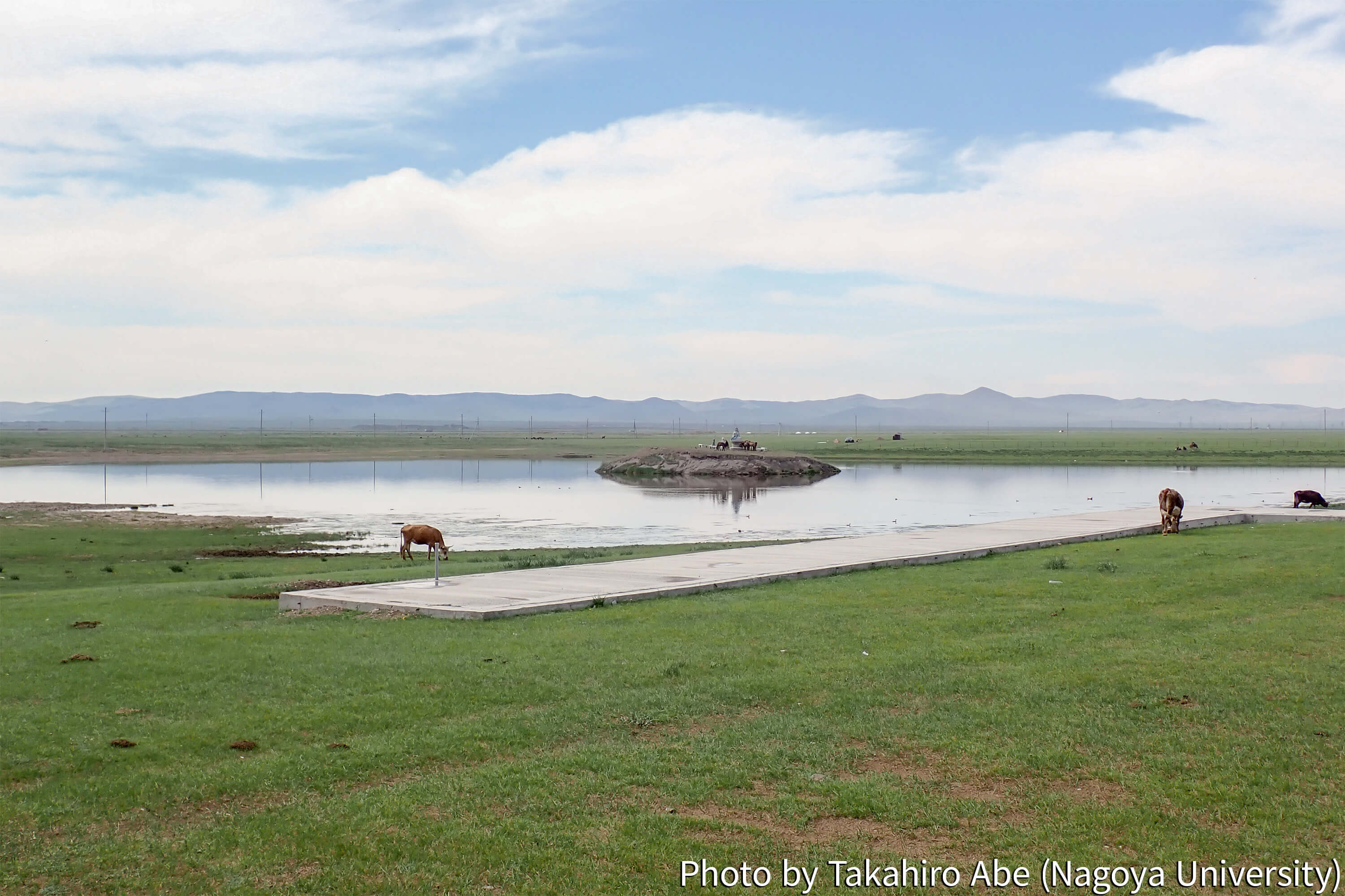
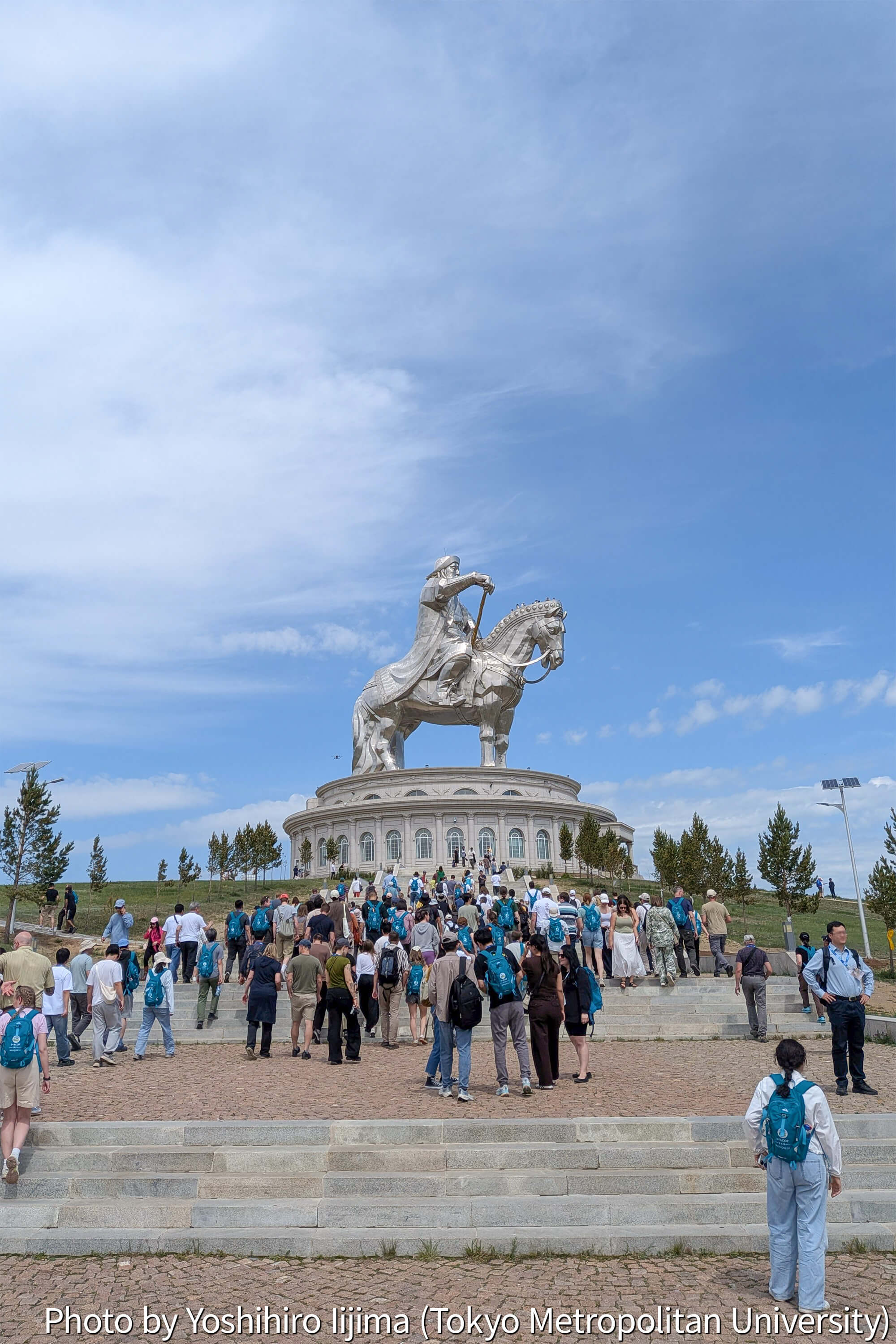
Several presentations on recent research progresses in Mongolia, Siberia and Alaska were also given by the members of Land and Life Environment theme. A local trip to the outskirts of the Ulaanbaatar City was held on 2 July to visit a “Pingo”, one of the permafrost landforms (Photo 3), and the Genghis Khan Statue and Observation Deck (Photo 4). A conference dinner was held after the local trip, and Prof. Mauro Guglielmin, University of Insubria, introduced the next International Conference on Permafrost (ICOP2028), the conference organized by IPA every 4 years, to be held in Florence, Italy in 2028. Throughout the conference, permafrost researchers from Europe, Asia, and North America, including Russia, were delighted to reunite after a long time, and they not only presented their research findings but also engaged in numerous discussions for future international collaborative research.